The lineup for the 2026 Xiami Music & Arts Festival, taking place at Aranya from August 28 to 30, was announced this week, and it is worth pausing on for reasons beyond the usual lineup chatter. Alongside a run of current international touring acts, the bill features a striking cluster of names that read less like a typical China festival poster and more like a curated trip back through two distinct musical pasts: the Chinese folk and rock scene of the late 1990s and early 2000s, represented by figures such as Lao Lang, Tao Jie, Ann Bo and Escape Plan, sitting alongside a wave of international bands whose commercial and critical peak fell broadly within the 2000s indie and alternative moment, among them The Cardigans, Kaiser Chiefs, Mogwai, Tricky, Tortoise, Cage the Elephant and The Horrors.
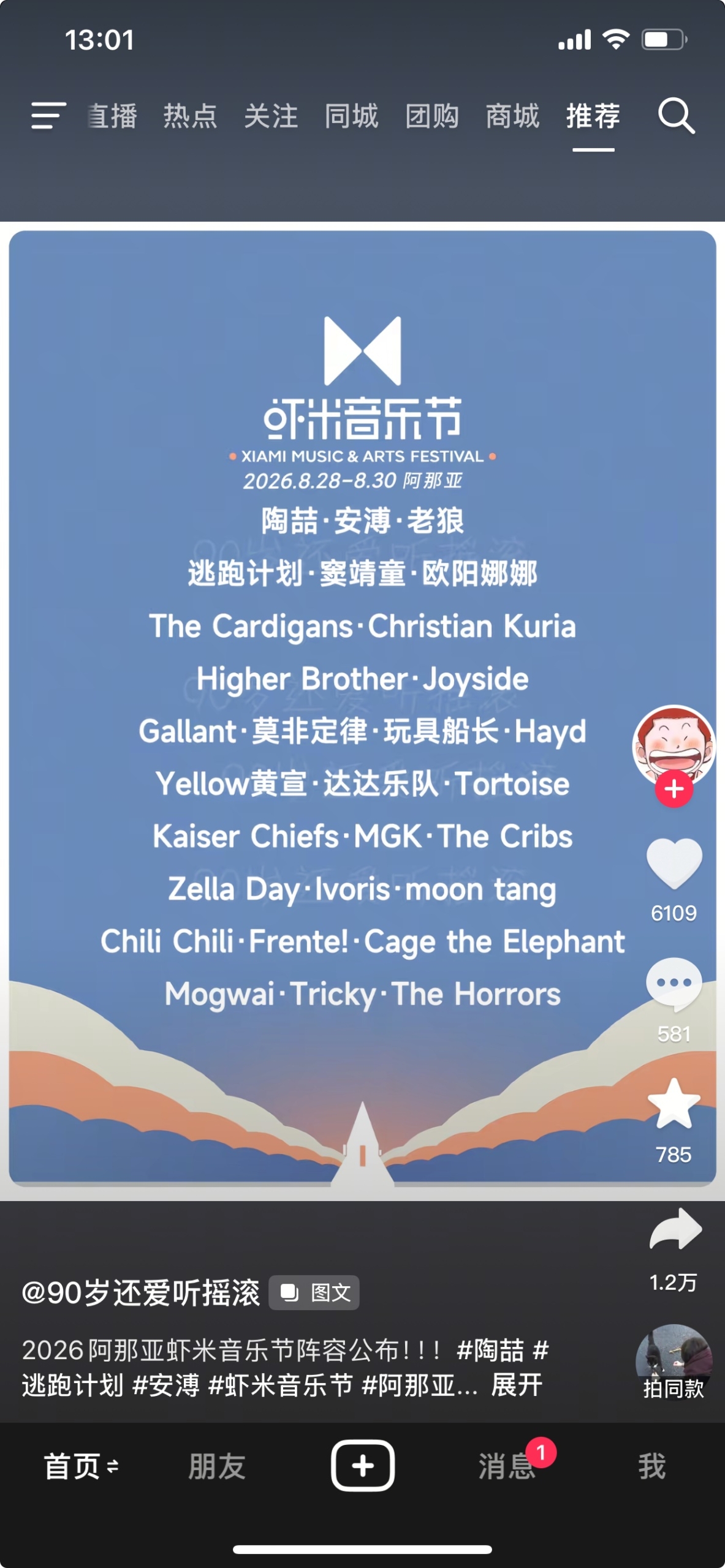
It is tempting to read this simply as programming variety, and to some extent it probably is, but there is a more interesting question sitting underneath the announcement, which is whether this represents the first real attempt to build a nostalgia festival for a Chinese audience, and whether the market conditions for that to succeed actually exist yet.
Nostalgia, in the way the term is generally used around festival programming in the West, depends on there being a large enough population of people who shared a formative listening experience long enough ago that revisiting it now carries emotional weight rather than simply being a preference for older music. That kind of nostalgia takes decades to build, and it requires two things in particular: a sufficiently long history of broad exposure to the genre or scene in question, and a cohort of fans old enough, and now sufficiently distant from their twenties, to feel the pull of looking back rather than forward.
On the first point, it is worth remembering that broad, genuinely wide-ranging access to international music for a mainstream Chinese audience is a relatively recent phenomenon, really only two decades deep once you account for how gradually streaming, imports and a more open cultural environment expanded what was actually available to listen to. That matters because it suggests there has, until quite recently, been comparatively little for a domestic audience to be nostalgic about when it comes to foreign music specifically, simply because there has not yet been enough runway for that kind of collective memory to form around international artists in the way it has in markets where access has been a given for far longer.
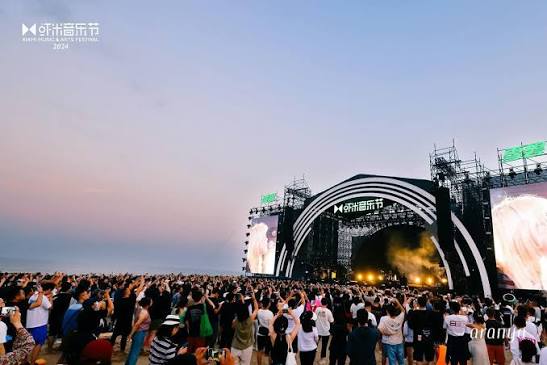
On the second point, the festival format itself in China is also roughly twenty years old as a live music concept, dating back to the mid-2000s. That timeline is significant because it means the first generation of Chinese festival goers, the ones who attended their first shows in their early twenties when the format was still new, are now moving through their forties. That is arguably the first moment China has had a cohort large enough, and old enough, to be a plausible audience for a nostalgia-driven festival experience in the way the concept is understood elsewhere, people who are not just fans of older music but who specifically associate that music with a particular, now distant, chapter of their own lives.
Seen through that lens, the Xiami lineup looks less like a coincidence of booking and more like a genuinely interesting test case, deliberately or not, of whether that audience and that emotional connection now exist in sufficient numbers to support a festival built around looking backward rather than forward. It brings together the domestic artists most likely to carry that generational weight for a Chinese audience with a slate of international acts whose relevance to that same audience would have been shaped during exactly the period when access to foreign music was expanding most rapidly.
Whether the commercial appetite is actually there remains genuinely uncertain, and there is no real precedent in the Chinese market to draw on in either direction. But given what it implies for how legacy artists, reunion tours and older domestic acts might be positioned and sold going forward, this feels like a lineup worth watching closely over the coming months, both for how tickets move and for how the wider industry responds.
Will you be in the moshpit for I Predict A Riot?